- Hotline: +86-755-28372909
- 24 Service Hotline: +86-18025312443
- E-mail: sales@c-starchina.com
- 中文


Every buyer of solar street lights eventually asks the same question: how do I know this luminaire will still be working in year five? Brochures and datasheets cannot answer that. What can is what actually happens to the product before it is packed.
Here is where most suppliers blur the answer. Our 48-hour burn-in test is written for mains-powered luminaires. Putting a solar street light on the same rack does not tell you much, because the components that decide whether it survives year five are not the ones a burn-in rack stresses. This article explains both sides: what the 48-hour test is for, why solar units are exempt, and what they go through instead.
Most electronic failures are early failures. A cold solder joint, a connector that is not fully seated, a marginal capacitor in the driver or a defective LED chip all tend to fail within the first hours of continuous full-load operation - not months later on a highway. Burn-in exists to force those defects to surface inside the factory, where they cost a rework, instead of on site, where they cost a reputation.
It is a screening test, not a life test. Passing 48 hours does not prove five years of service; it proves the unit has no infant-mortality defect.
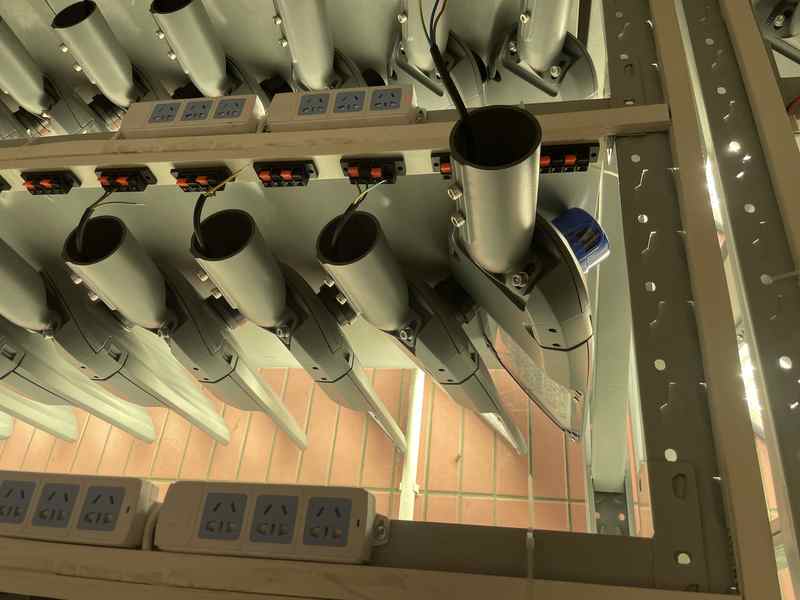
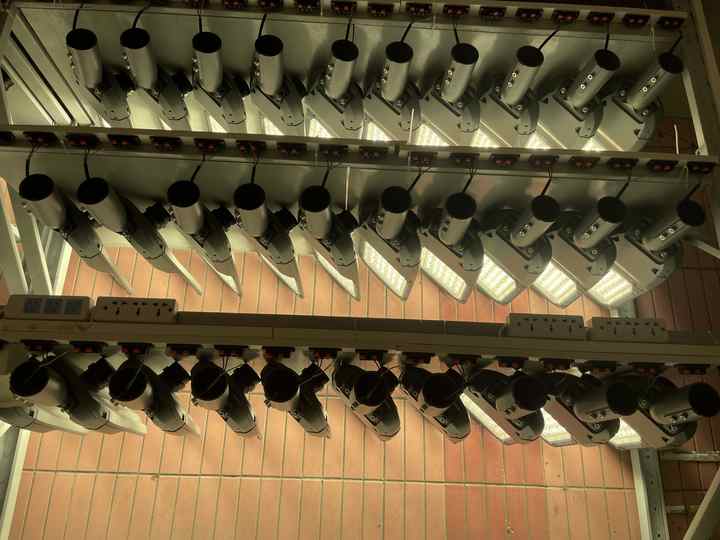
Finished luminaires are numbered, logged and mounted on multi-tier racks inside a dedicated aging room. Each position is independently wired, so a fault in one unit cannot hide behind its neighbours. The lights then run continuously for 48 hours at full load, under supervision, and anything that drifts comes off the rack for engineering review.
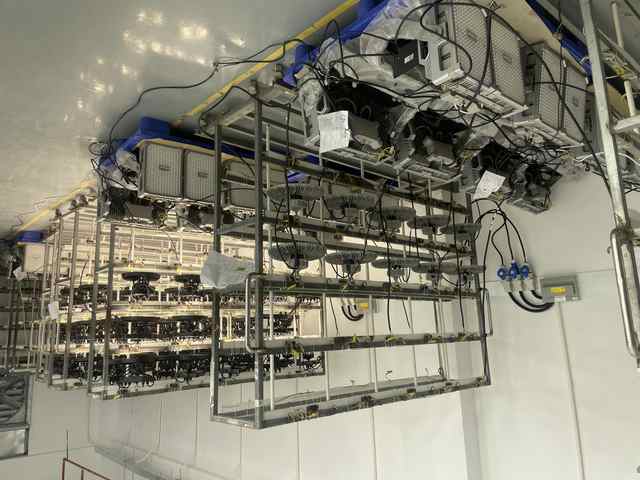
The racks above hold our AC-powered range - high-power flood lights, grid-connected street lights and industrial fixtures used in projects where mains power is available. Those products are driven directly from a constant AC supply, which makes "run at full load for 48 hours" both possible and meaningful.
An all-in-one solar street light is a battery-buffered DC system. It cannot run continuously at full load for 48 hours: the battery would be flat after one night, and feeding the LED driver from a bench supply instead would bypass exactly the parts that matter - the panel, the controller and the battery.
What ages a solar light in the field is not continuous burn time. It is charge and discharge cycling, controller behaviour when the battery runs low, cell balance across hundreds of nights, and water finding its way past a gasket. A burn-in rack reproduces none of that. Running the test anyway would produce a number for the catalogue, not information about the product.
Every solar unit leaves the line through a different sequence, aimed at the failure points that actually occur in the field:
| AC-powered fixtures | Solar street lights | |
| 48-hour burn-in | Yes - every unit, full load, continuous | No - the rack cannot reproduce field stress |
| Function check | During and after burn-in | Every unit, on the workshop floor |
| Electrical / lumen test | Power draw and driver stability | Power draw, output and efficacy measured |
| Battery | Not applicable | Matched cells, capacity and charge-discharge checked |
| Sealing / IP | Housing inspected during burn-in | Gaskets, cable entries and joints checked per unit |
Almost every solar lighting supplier quotes an aging test, and the number sounds reassuring. The useful question is different: which test catches the failure modes of this specific product, and can I see the record for my batch?
For a mains fixture, that is burn-in. For an all-in-one solar light, it is the charge-discharge path, the controller logic, the electrical measurement and the seal. Applying a test designed for one product to the other is how a spec sheet gets impressive and a project still goes dark.
Since 2012, C-Star has built LED and solar lighting the same way: own factory, own test equipment, and no unit packed without a pass. The full solar street lighting range - with efficacy, battery and autonomy data - is available for review at any time.
Want the QC checklist for your next order? C-Star provides test procedures, specification sheets and project references for distributors, contractors and municipal buyers.
Browse the product range or send us your project requirements - or email sales@c-starchina.com.