- Hotline: +86-755-28372909
- 24 Service Hotline: +86-18025312443
- E-mail: sales@c-starchina.com
- 中文


Every solar street light buyer eventually asks the same question: will this lamp still work reliably after two or three years outdoors? The answer has less to do with advertising claims and more to do with three specific failure points. In our factory service records and customer feedback, most field failures of solar street lights trace back to the battery, the driver, or the waterproofing of the lamp housing. The good news is that all three are predictable, and all three can be prevented before the product leaves the factory.
The battery is the heart of an all-in-one solar street light, and it is also the component most sensitive to quality shortcuts. Common field problems include capacity fading after the first rainy season, batteries that cannot support the promised nightly runtime, and cells that fail early in high-temperature climates. In many low-cost lamps, the advertised capacity exists only on the spec sheet.
This is why battery chemistry and honest sizing matter. C-Star uses LiFePO4 batteries with real capacity matched to 3 to 5 days of rainy-day autonomy, because lithium iron phosphate handles high temperatures and deep discharge cycles far better than ordinary lithium cells. For projects where long service life is the priority, our FT1 and FT3 series are configured specifically for multi-night autonomy and long cycle life.
The second most common failure point is the driver. A driver that is undersized for the LED load will overheat inside a sealed housing, and overheated electronics fail long before the LED chips themselves wear out. Cheap lamps also often lack adequate surge protection, which becomes critical in areas with unstable grids or frequent thunderstorms. And an exact match between the claimed wattage and the actual electrical output cannot be verified by looking at a catalogue.
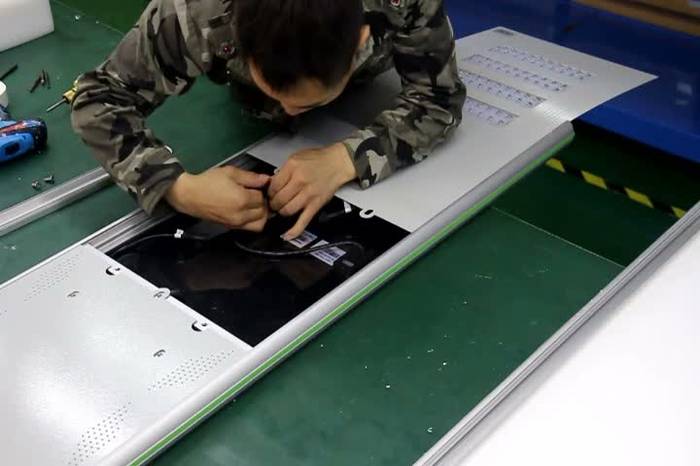
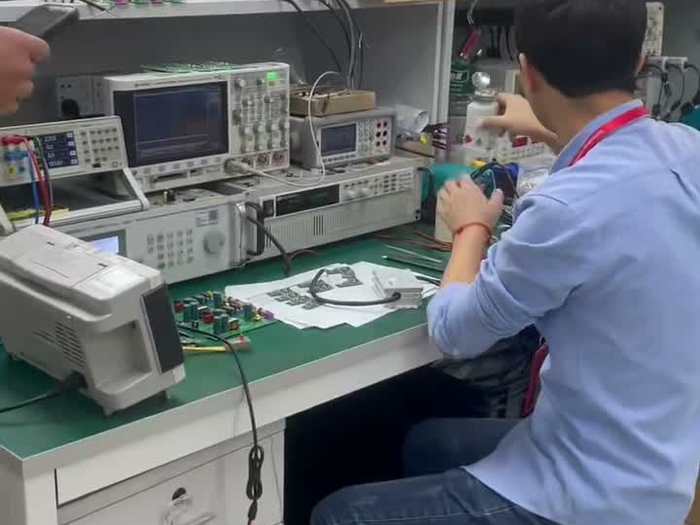
The only reliable check is measurement. During production, every unit's power output should be tested against its rated specifications, and the internal wiring and connectors should be inspected. Loose connectors are a small detail that causes a large share of night-black lamps.
The third failure point is water. An IP rating printed on a datasheet is easy to claim and hard to guarantee. Poor gaskets, unsealed cable entries and weak housing joints let moisture enter the lamp, causing corrosion, dimming and eventual failure, especially in coastal, humid or rainy climates. Buyers should ask how the IP65 or IP66 rating is actually verified, not just stated.
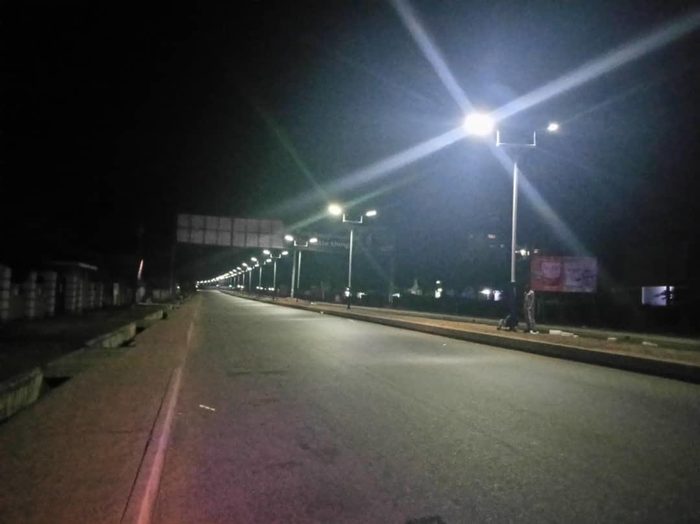
At C-Star, prevention is built into the production process rather than promised afterwards:
Real installations are the final proof. You can review completed road and area lighting projects in our project cases, where our solar street lights have operated for years in hot climates and long-night conditions across Africa, the Middle East and Southeast Asia.
Looking for a solar street light supplier whose products are tested before they ship? Browse our product center or contact us at sales@c-starchina.com for a quotation, a full QC test checklist, or a customized lighting proposal for your project.